Benign paroxysmal positional vertigo (BPPV) is a common condition. You feel as if the room is spinning after changing position, moving your head quickly, or even just rolling over in bed.
Vertigo is a false feeling of motion plus disorientation that makes it seem as if the room is spinning. A vertigo attack may cause sudden nausea, vomiting, and heavy sweating. Severe vertigo causes a loss of balance. You may even fall down.
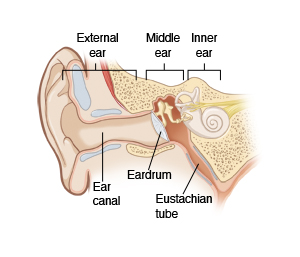
Vertigo is caused by a problem with the inner ear. The inner ear is located behind the middle ear. It is a part of the balance center of the body. Vertigo can happen when small calcium "stones" move into an area of your inner ear called the semicircular canal. This may happen as a result of aging, head injury, or disease of the inner ear. Once that happens, moving your head in certain ways may cause the particles to stimulate the inner ear. This creates the feeling of vertigo.
An episode of vertigo lasts only a few seconds to minutes. Once you are over the first episode of vertigo, it may never return. Sometimes symptoms return off and on for several weeks or longer.
BPPV is treatable. The Epley maneuver is a simple treatment for the common cause of vertigo. Your doctor may try to put the calcium particles back in their correct position by having you do a series of head movements. Your doctor may have you do other types of maneuvers, depending on which canals the crystals are in.
Home care
Follow these guidelines when caring for yourself at home:
-
Rest quietly in bed if your symptoms are severe. Change position slowly. There is usually one position that will feel best. This might be lying on one side or lying on your back with your head slightly raised on pillows. Until you have no symptoms, you are at a higher risk of falling. Let someone help you when you get up. Get rid of home hazards such as loose electrical cords and throw rugs. Don’t walk in unfamiliar areas that aren't lighted. Use night-lights in bathrooms and kitchen areas.
-
Don't drive or work with dangerous machinery for 1 week after symptoms go away, or as directed by your doctor. This is in case symptoms return suddenly.
-
Try repositioning maneuvers at home if your doctor instructs you to do so.
Follow-up care
Follow up with your doctor or an ear, nose, and throat specialist (ENT or otolaryngologist), or as directed. Tell your doctor about any ringing in your ear or hearing loss.
If you had a CT or MRI scan, a specialist will review it. You'll be told of any new findings that may affect your care.
When to contact your doctor
Contact your doctor right away if:
-
Your vertigo gets worse.
-
You have repeated vomiting.
-
You have weakness that gets worse.
-
You have trouble hearing.
-
You have a fever of 100.4ºF (38ºC) or higher, or as directed by your doctor.
Call 911
Call
-
You faint.
-
You have a severe headache, confusion, or abnormal drowsiness.
-
You have weakness of an arm or leg or one side of the face.
-
You have trouble with speech or vision.
-
You have trouble walking.
-
You have a seizure.
-
You have a fast heart rate.
-
You have chest pain.
-
You are short of breath.

Find Your Provider
Find a DoctorRelated Articles
Peritonsillar Abscess
A peritonsillar abscess is a collection of pus that forms near the tonsils. Read on to learn about symptoms, diagnosis, and treatment.
Candida Infection: Thrush
Thrush is a type of fungal infection in the mouth and throat. Thrush does not usually affect healthy adults. It is more common in people with a weakened immune system. It is also more likely if you take antibiotics. Thrush is normally not contagious.
Peritonsillar Abscess
An abscess around the tonsils can cause severe sore throat, pain with swallowing, fever, drooling, and trouble opening the mouth.
Ear Barotrauma
Ear barotrauma is a problem of the middle ear and eardrum. It occurs when unequal pressures form inside the middle ear and outside the eardrum. This often happens with altitude changes, such as during an airplane flight or scuba diving.