Minor muscle or joint injuries are often treated with an elastic bandage. The bandage provides support and compression to the injured area. An elastic bandage is a stretchy, rolled bandage. Elastic bandages range in width from 2 to 6 inches. They can be used for a variety of injuries. The bandages are often called ACE bandages, after a common brand name.
If used correctly, elastic bandages help control swelling and ease pain. An elastic bandage is also a good reminder not to overuse the injured area. However, elastic bandages don't provide a lot of support and will not prevent reinjury.
Home care
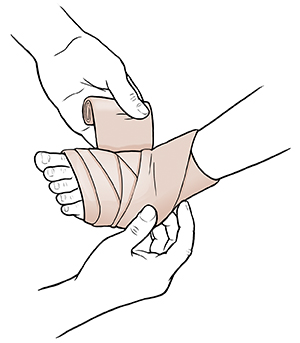
To apply an elastic bandage:
-
Check the skin before wrapping the injury. It should be clean, dry, and free of drainage.
-
Start wrapping below the injury and work your way toward the body. For an ankle sprain, start wrapping around the foot and work up toward the calf. This will help control swelling.
-
Overlap the edges of the bandage so it stays snugly in place.
-
Wrap the bandage firmly, but not too tightly. A tight bandage can increase swelling on either end of the bandage. Make sure the bandage is wrinkle free.
-
Leave fingers and toes exposed.
-
Secure ends of the bandage (even self-sticking ones) with clips or tape.
-
Check often to be sure there is good circulation, especially in the fingers and toes. Loosen the bandage if there is local swelling, numbness, tingling, discomfort, coldness, or discoloration (skin pale or bluish in color).
-
Rewrap the bandage as needed during the day. Reroll the bandage as you unwind it.
Continue using the elastic bandage until the pain and swelling are gone or as your child's health care provider advises.
If you have been told to ice the area, the ice can be secured in place with the elastic bandage. Wrap the ice pack with a thin towel to protect the skin. Don't put ice or an ice pack directly on the skin. Ice the area for no more than 20 minutes at a time.
Follow-up care
Follow up with your child's health care provider as advised.
When to call the doctor
Contact your child's health care provider if:
-
The pain and swelling doesn't get better or gets worse.
-
Your child has trouble moving injured area.
-
Skin discoloration, numbness, or tingling doesn’t go away after the bandage is removed.
Featured in