A baby (the fetus) often moves down between the pelvic bones (descend) before birth. If this is your first pregnancy, this may happen 2 to 4 weeks before labor. With repeat pregnancies, the baby may not “drop” until labor begins. The baby usually moves down headfirst. If your baby is not in a safe position for birth, or if there is a problem with the placenta, you may need special care. A cesarean section delivery may be needed.
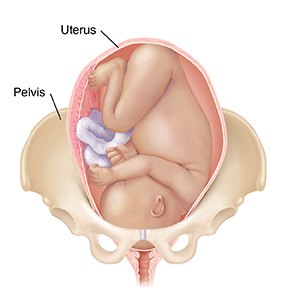
Conditions that require special care
Cephalopelvic disproportion (CPD). Baby’s head or body is too big for the pelvis.
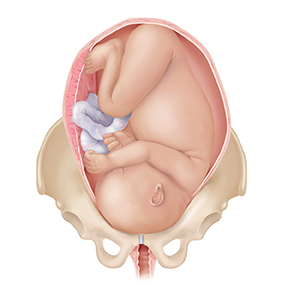
Breech position. Baby is positioned with feet or buttocks first.
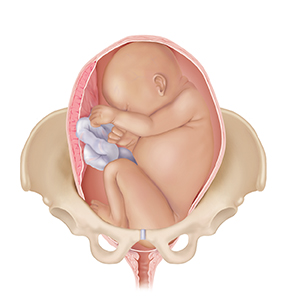
Transverse position. Baby lies horizontally across the pelvis.
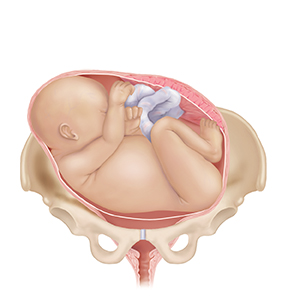
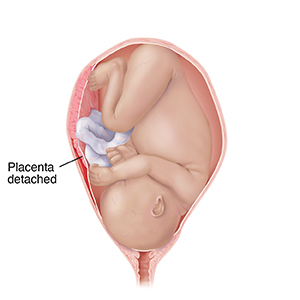
Placental abruption. Placenta separates from the uterus.
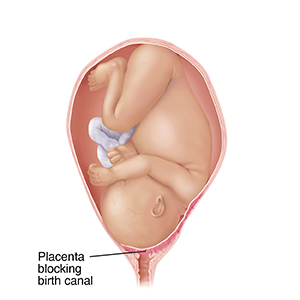
Placenta previa. Placenta blocks the cervix.

OB/GYN
Find a DoctorRelated Articles
Pregnancy and Childbirth: Abdominal Cerclage
A cerclage is a procedure to close the cervix during pregnancy. It is done to help prevent miscarriage or premature birth. Here is what you need to know about the procedure.
Labor
Labor usually starts 2 weeks before or after the estimated date of delivery. No one knows exactly what sets off the onset of labor. Read on to learn more.
Reasons for a Cesarean Section Birth
In most cases, a cesarean section birth is not expected. It may be needed because of concerns about the baby, the mother, or the baby's passage through the birth canal.
Before a Cesarean Birth
Whether a cesarean is scheduled or not, the preparation is nearly the same. Either way, your healthcare team will get you ready for surgery. If you have a partner, they can often stay with you for most of this time.