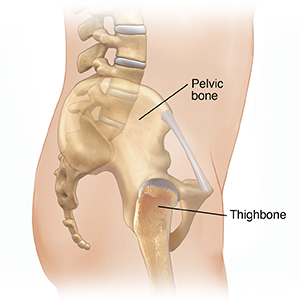
The hip joint is one of the body’s largest weight-bearing joints. It’s a ball-and-socket joint. This helps the hip remain stable even during twisting and extreme ranges of motion. A healthy hip joint allows you to walk, squat, and turn without pain.
A healthy hip
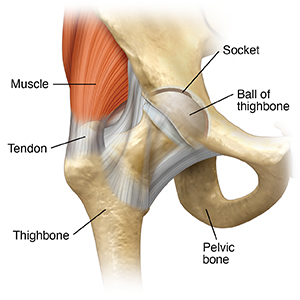
The hip joint is formed where the rounded head of the thighbone (femur) joins the pelvic bone. The joint is covered with tissue and powered by large muscles. When all the parts listed below are healthy, a hip should move easily.
-
Cartilage is a layer of smooth tissue. It covers the ball of the thighbone and lines the socket of the pelvic bone. Healthy cartilage absorbs stress and allows the ball to glide easily in the socket.
-
Muscles power the hip and leg for movement.
-
Tendons attach the muscles to the bones.

Orthopedics CTA
Find a DoctorRelated Articles
The Shoulder Joint
The shoulder is made up of bones, muscles, ligaments, and tendons. Learning about the parts of the shoulder joint will help you to understand your shoulder problem.
Your Neck Muscles
Illustration and explanation of neck muscles.
Parts of a Hand
Hands are made up of more bones and moving parts than most other areas of the body. Learn more, along with helpful diagrams.
Anatomy of the Foot
Your feet are susceptible to many stresses. Foot pain and problems can cause pain, inflammation, or injury.