At home, you play a big role in your recovery. The better you care for your foot, the faster you may heal. And the faster you heal, the sooner you can get back to your normal activities. Follow your doctor's instructions about how to care for your foot after surgery.
Standing or walking
For the first few days, your doctor may tell you to not bear weight on your foot. This means you should not put your weight on it when you stand or walk. You may use a cane, crutches, or a walker to help you move around. Over time, you may work up to putting more weight on your foot, as instructed by your doctor. Follow your doctor's instructions. If you put weight on your foot too soon, the repair may be damaged.
Relieving pain
-
Take pain medicine to relieve pain. Take antibiotics to prevent infection as you’re instructed.
-
To protect your foot, wear your surgical (post-op) shoe as advised.
-
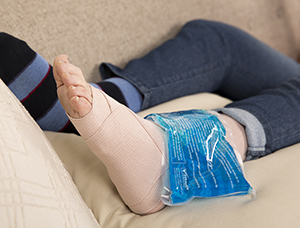
To help relieve pain and swelling, apply a bag of ice to your foot as instructed. Do not put ice directly on your skin. Place a thin towel between the ice bag and your skin. Raise your foot above heart level the first few days.
Strengthening your foot
Your doctor may advise ways to get your foot back in shape. You may be told to do exercises. You may use weights for these. To help strengthen your foot, follow these tips:
-
Start out slowly, then increase the repetitions as advised.
-
For the first few weeks, walk only short distances. Do this only if your doctor says that you can put weight on your foot. Walking makes your foot stronger.
-
Do physical therapy as advised. This is to help you strengthen your foot. And it helps you increase its range of motion.
Follow up with your doctor
You may need to visit your doctor the first week or two after surgery. They will remove your dressing, check your incision, and put on a new dressing. Your stitches (sutures) and your splint or cast may be removed in 2 or more weeks. To make sure you’re healing properly, you may see your surgeon regularly for 3 months or more. You may need follow-up X-rays. Write down any questions you have before going to your follow-up appointment. This will help to make sure that you don't forget to ask these questions.

Orthopedics CTA
Find a DoctorRelated Articles
Back Exercises: Side Bend Stretch
This exercise works your sides and shoulders.
Soleus Stretch (Flexibility)
Follow the step-by-step instructions for this tendon stretch.
Using Crutches: Sitting, Standing, Through Doors
Learn how to use your crutches safely.
Chin Tuck (Posture and Strength)
Steps for doing a chin tuck for strength and posture.