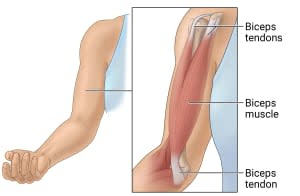
Biceps tendons connect the biceps muscle to the bones at the shoulder and elbow. These tendons can fray from heavy use over time and then completely rupture or tear from injury, such as from lifting a heavy object. Or one may rupture from repetitive activity such as swimming or tennis.
Symptoms include:
- A pop or snapping at the time of injury.
- Sudden, sharp pain in the shoulder or elbow.
- Swelling, bruising, and tenderness.
- Weakness.
- Bulging in the upper arm.
- Trouble turning the hand palm up or palm down.
For many people, the pain from a partial tear in the tendon resolves on its own over time. Treatment may involve:
- Rest. Stay away from heavy lifting or overhead movements. Your doctor may advise using a sling for a brief time.
- Ice. Use an ice pack for 20 minutes several times a day. Wrap the cold pack in a thin towel to protect your skin.
- Physical therapy. You may go to a physical therapist, or your doctor may instruct you to do certain exercises at home.
If these measures don't allow you to heal, surgery to reattach the torn tendon may be recommended. This may be important for athletes or people who need arm strength to perform their job. Surgery is almost always required for a fully detached biceps tendon. After surgery, rehabilitation is needed.
Home care
Your doctor may prescribe medicines for pain. Or you may use acetaminophen, ibuprofen, or naproxen to control the pain and reduce swelling. If you have chronic liver or kidney disease, talk with your doctor before taking these medicines. Also talk with your doctor if you have had an ulcer or gastrointestinal bleeding.
Follow-up care
You may be referred to an orthopedic doctor for follow-up care. Surgery may be needed to repair this injury, so it's very important to make an appointment with the specialist as soon as you can.
When to contact your doctor
Contact your doctor right away if:
- Pain or swelling gets worse.
- Redness or another change in color appears.
- The injured area becomes cold, bluish, numb, or tingly.

Orthopedics CTA
Find a DoctorRelated Articles
Shin Splints (Medial Tibial Stress Syndrome)
Shin splints are often caused by tendinitis. When the tendons in the shin muscles become inflamed, it causes pain in the shin.
Groin Strain (Adult)
A groin strain is a stretching or partial tearing of the muscle in the lower abdomen or upper thigh. Here's how to care for yourself at home.
Leg or Arm Fracture
Any fracture to the leg or arm should be considered a medical emergency. Here's what you need to know about getting the correct treatment.
Tailbone (Coccyx) Fracture
The tailbone, or coccyx, is at the bottom of your spine. It is possible to break (fracture) this bone when you fall and land in a seated position. This injury takes about 4 weeks to heal. Read on for details on caring for this injury at home.