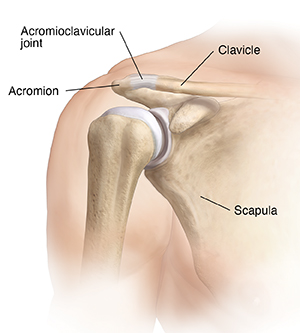
The AC (acromioclavicular) joint is where the shoulder blade (scapula) meets the collarbone (clavicle). The highest point of the shoulder blade is called the acromion. Strong tissues called ligaments connect the acromion to the collarbone, forming the AC joint.
An AC joint sprain occurs when an injury damages the ligaments in the AC joint.
What causes an AC joint sprain?
Often an accident or injury forces the AC joint apart. This may include:
-
Falling onto your shoulder.
-
Falling onto your outstretched hand.
-
Getting a direct blow to your shoulder.
Symptoms of AC joint sprain
Symptoms can vary depending on how serious the injury is. They can include:
-
Shoulder pain.
-
A shoulder that feels sore when touched.
-
Swelling.
-
Bruising.
-
A change in the shoulder’s shape.
-
A bulge above the shoulder.
-
A shoulder that appears to droop.
-
A collarbone that moves upward.
-
Limited movement in the shoulder.
Treatment for AC joint sprain
Treatment will depend on how serious the strain is. It will also depend on whether you have damage to other parts of the shoulder. Treatment may include:
-
Rest. This allows your shoulder to heal. You should avoid activities that stress the joint. This includes reaching overhead or sleeping on your shoulder.
-
Sling. This protects the shoulder and holds the joint in a good position for healing.
-
Cold packs. These help reduce swelling and relieve pain.
-
Prescription or over-the-counter medicines. These help relieve pain and swelling.
-
Arm and shoulder exercises. These help keep the shoulder joint mobile as it heals. They also help improve muscle strength around the joint.
When to contact your doctor
Contact your doctor right away if you have:
-
A fever of 100.4°F (38°C) or higher, or as directed by your doctor.
-
Chills.
-
Symptoms that don’t get better or that get worse.
-
New symptoms.
Author: Michels, Karen
© 2000-2026 The StayWell Company, LLC. All rights reserved. This information is not intended as a substitute for professional medical care. Always follow your healthcare professional's instructions.
Orthopedics CTA
Find a DoctorRelated Articles
Rib Contusion or Minor Fracture
A rib fracture (bone break) may cause the same symptoms as a rib contusion. Treatment for both is the same.
Open Finger Fracture
You have a broken finger (fracture) with a nearby cut, puncture, or deep scrape. This causes local pain, swelling, and bruising. Because of the open injury, you are at risk for infection in the skin and bone. You will take antibiotics to lower the risk for infection.
Knee Sprain
A sprain is an injury to the ligaments or capsule that holds a joint together. Here's how to care for yourself at home.
Compression Fracture
A compression fracture is a type of break in the bones in your back that stack up to form your spine. A compression fracture can cause back pain, limited movement, a decrease in height, and a stopped over posture. It often develops as a result of osteoporosis.