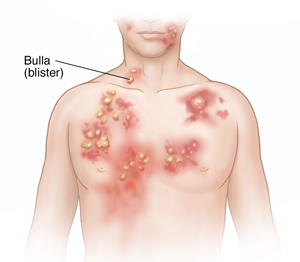
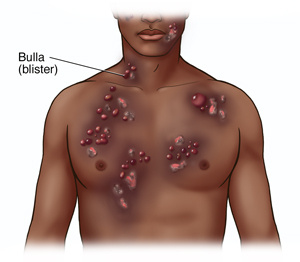
Bullous pemphigoid is a rare and long-term (chronic) autoimmune skin disease. It is more common in people ages 60 and older. It causes large blisters to form. These blisters may be on one part of the body or all over. They often appear on the arms, legs, groin, chest, and stomach. Sores may sometimes occur in the mouth, too.
How to say it
BUHL-uhs PEHM-fih-goyd
What causes bullous pemphigoid?
Bullous pemphigoid is an autoimmune disease. That’s when the immune system attacks healthy parts of the body. In this case, it attacks the proteins that join the skin cells to one another. The disease may also be triggered by some medicines, such as penicillin and furosemide. Burns from sun, heat, or radiation can also trigger the disease.
What are the symptoms of bullous pemphigoid?
Bullous pemphigoid may be red and itchy at first. It may look like hives or a rash. Large, firm blisters may then form. These blisters are often filled with a clear liquid. They may feel very itchy. The blisters may pop. But they usually don’t leave any scars.
How is bullous pemphigoid treated?
The blisters from this skin disease may go away and come back. So treatment is often needed for a few years. Treatment options include:
-
Skin care. Using mild soap and anti-itch creams may help with symptoms.
-
Steroids. Steroids are the main treatment option for this disease. They may be creams or ointments that you put on your skin. Or they may be in pill or liquid form (oral). They can ease itching and stop new blisters from forming. If you take oral steroids for a long time, you may also need medicines to prevent side effects from the steroids.
-
Antibiotics. You may need antibiotics to prevent or treat infection.
What are the possible complications of bullous pemphigoid?
Skin infection is the most common complication.
When to contact your doctor
Contact your doctor or get medical care right away if:
-
You have a fever of
100.4 °F (38 °C) or higher, or as directed by your doctor. -
Pain gets worse.
-
Your symptoms don’t get better, or they get worse.
-
You have new symptoms.
Author: Semko, Laura
© 2000-2026 The StayWell Company, LLC. All rights reserved. This information is not intended as a substitute for professional medical care. Always follow your healthcare professional's instructions.