Lichen planus is a noncanerous (benign), long-term (chronic) skin disease. This extremely itchy rash doesn't spread from person to person. It can be found anywhere on the body. But the rash is most often found on the wrists, ankles, arms, legs, scalp, and genitals. It may also be seen on the nails and in the mouth. Having it in your mouth can raise the risk of getting cancer in your mouth (oral cancer). People ages 30 to 60 are more likely to get lichen planus.
How to say it
LI-kehn PLAY -nuhs
What causes lichen planus?
The cause of lichen planus often isn't known. But metals, such as gold, may set it off. So may some medicines used to prevent malaria or to treat the following conditions:
-
High blood pressure.
-
Heart conditions.
-
Arthritis.
-
Some research suggests the disease may also be linked to Hepatitis C.
Women are more frequently affected than men. It usually occurs between 30 and 60 years and is rare among children.
Symptoms of lichen planus
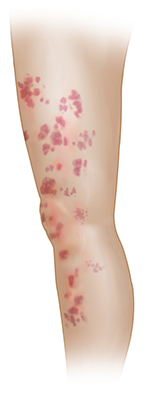
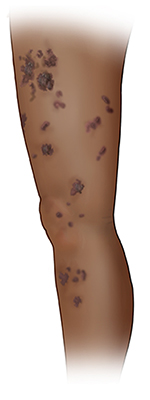
-
On the skin. Lichen planus causes very itchy, flat-topped bumps or patches to form. They're often a shiny red or purple color and straight-edged (polygonal), not round. They may also have fine white lines on them. Over time, the bumps may form thick patches of rough, scaly skin. The skin may be darker in areas where the patches have healed.
-
In the mouth. It's commonly seen on the insides of the cheeks, but can also be on the tongue, lips, and gums. The patches may look like white lace. Often, these patches don't cause pain. Sometimes, oral lichen planus lesions are red, painful sores.
-
On the genitals. The skin here becomes bright red and raw. Sometimes sores can appear. They can make sex painful.
-
On the nails. The nails can become thin, split, and grooved. In severe cases, the nail may be temporarily or permanently destroyed.
Treatment for lichen planus
Lichen planus often goes away in a few years. It may go away without treatment. To ease itching and improve the look of the rash, treatment may include:
-
Steroids. Depending on what type your doctor prescribes, these medicines can be applied directly onto the skin, injected into the affected area, or taken by mouth.
-
Other medicines. Your doctor may give you other medicines to suppress the immune system. Or you may get medicines to ease itching and pain, such as an antihistamine or retinoid.
-
Phototherapy. This treatment directs ultraviolet light on the skin to help clear it. It may be helpful for widespread skin disease.
Self-care tips for lichen planus
-
Don’t scratch any affected areas. This can sometimes spread the rash.
-
Use mild soap to bathe and moisturize with lotion afterward.
-
Take steps to reduce your risk of getting oral cancer:
-
Don't smoke, chew tobacco, or drink alcohol.
-
Get screened for oral cancer by a dentist or dermatologist every 6 to 12 months.
-
Get a dental checkup and cleaning twice a year.
-
Brush your teeth twice a day.
-
Floss every day.
-
Don't have foods or drinks that can make lichen planus in the mouth worse. This includes spicy foods, citrus fruits (such as oranges and grapefruits) and juices, tomatoes, and foods made with tomatoes (such as salsa, pasta sauces, and ketchup), crispy and salty snacks (such as chips), and drinks that have caffeine (such as coffee, tea, and cola).
-
When to contact your doctor
Contact your doctor or get medical care right away if:
-
You have a fever of 100.4°F (38°C) or higher or as directed by your doctor.
-
You have new symptoms.
-
You have pain that gets worse.
-
Your symptoms don’t get better, or they get worse.
-
You have mouth sores.
Author: Semko, Laura
© 2000-2026 The StayWell Company, LLC. All rights reserved. This information is not intended as a substitute for professional medical care. Always follow your healthcare professional's instructions.