Dressing your incision helps keep it clean, dry, and infection-free. That way, it will heal faster. Follow the steps below, whether dressing the incision yourself or with the help of a family member or other caregiver.
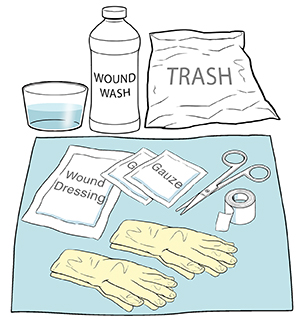
Step 1. Wash your hands and set up
-
Use liquid soap. Lather and scrub vigorously for at least 20 seconds. Scrub between your fingers and under your nails.
-
Rinse with clean, running water, keeping fingers pointing down. Use a clean paper towel to dry your hands and turn off the faucet.
-
If soap and water aren't available, it's okay to clean your hands with an alcohol-based hand sanitizer that contains at least 60% alcohol.
-
Put all your supplies on a clean cloth or paper towel. Open a plastic trash bag.
-
Peel back the edges of the dressing packages. Pour any irrigation solutions into solution cups.
-
Clean the scissors with soap and water. Cut each piece of tape
4 inches longer than the dressing.
Step 2. Remove the old dressing
-
Put on new disposable medical gloves.
-
Loosen the tape by pulling gently toward the incision. Remove the dressing one layer at a time. Put it into the plastic bag.
-
Remove your gloves, and put them in the plastic bag. Wash your hands again, as described above. Then put on new gloves.
Step 3. Clean and dress the incision
-
Clean the incision and apply a new dressing as directed.
-
Put all used supplies in the plastic bag.
-
Remove your gloves last, and put them in the bag.
-
Seal the bag, and put it in the trash.
-
Be sure to wash your hands again.
When to call a doctor
Contact your health care provider or seek medical care right away if:
-
Your incision suddenly opens.
-
You have bleeding from the incision or an increase in its size.
-
You have increased redness, swelling, or drainage.
-
You have pain in or around the incision.
-
There's a change in the color of the incision.
-
You have a fever of
100.4 °F (38 °C ) or higher, or as directed by your health care provider. -
You have chills.
Featured in

Orthopedics CTA
Find a DoctorRelated Articles
Wound Care After Surgery: Pain
It's normal to feel pain at the incision site. The pain decreases as the wound heals. Pain that continues more than a few weeks after surgery or pain that gets worse any time after surgery can be a sign of a problem.
How to Empty Your Drain After Surgery
Here are images showing how to empty your drain after surgery.
Discharge from Outpatient Surgery
This sheet will help you learn what to expect after your outpatient surgery. It covers medicines, recovering at home, and follow-up care.
Bladder and Bowel Care After Surgery
After any kind of surgery, many people have slow bowels and trouble urinating. This is common and lasts for a few days or so.