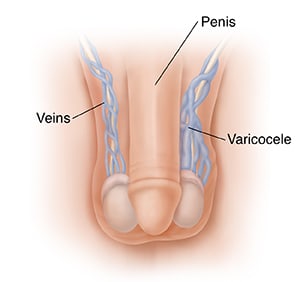
A varicocele is a swelling in the veins above the testicles. It's similar to having varicose veins in the legs. The swelling occurs when too much blood collects in the veins because they're damaged. A varicocele most often occurs above the left testicle.
How to say it
VAYR-ih-koh-SEEL
Veins in the scrotum
The scrotum is a sac of skin that covers the testicles. These are the male sex organs that make sperm and male hormones. Blood vessels in the scrotum carry blood to and from the testicles. The vessels that carry blood away from the testicles are called veins.
When there’s a problem in the veins
The veins that carry blood from the testicles extend up into the groin. That means the blood has to travel upward a long way. Valves in the veins act like gates to keep the blood from flowing back toward the testicles. Sometimes these valves don't close fully. Or the muscles in the walls of the veins may be weak. Then some blood flows back into the scrotum and collects in the veins above the testicles. This makes the veins enlarge.
What are the symptoms?
A varicocele often causes no symptoms at all. Or it may cause an achy or heavy feeling in the scrotum. The pain may be worse later in the day or after standing for a long time. You may also see swollen veins just under the skin in the scrotum.
A varicocele can lower sperm count
When blood collects in the veins above the testicles, changes occur. These changes can reduce the number and the quality of the sperm. In many cases, sperm count improves after treatment.