From conception (fertilization) until after the birth of your child, you and your baby will change every day. To help you understand what is happening, we’ve outlined how pregnancy begins and some of the changes you may notice.
Your changing body
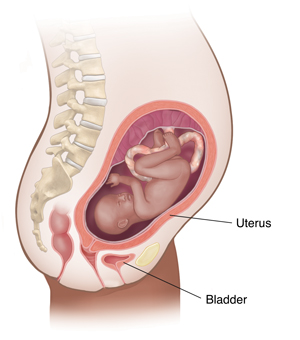
Pregnancy affects almost every part of your body. You may notice some of the following physical and emotional changes:
-
Your uterus expands outward and upward as your baby grows. You may feel pressure on your bladder, stomach, and other organs.
-
You may notice skin color changes on your forehead, nose, and cheeks. A dark line may form from your bellybutton down to your pubic area. The skin color around your nipples and thighs may also change.
-
Pink stretch marks may appear on your belly (abdomen), breasts, or hips.
-
Your hair may seem thicker. You lose less hair during pregnancy.
-
You may feel fine one day and weepy the next. This is caused by changes in your body, such as increased hormones. These are chemicals that affect the function of certain organs and also your moods.
-
You may have constipation, hemorrhoids, or heartburn.
-
You may have mild shortness of breath.
-
Your legs may cramp.
-
You may have nausea and vomiting.
-
You may experience dizziness, extreme tiredness, and sleep problems.
-
You may experience temporary bladder control problems.
-
Nose bleeds and nasal stuffiness are common.
-
Your breasts get bigger and are sometimes sore.
How pregnancy begins
Conception is the union of a sperm and an egg. When it happens, your baby’s genetic makeup is complete, even its sex. Fertilization takes place in the fallopian tube. The fertilized egg then travels down this tube to the uterus (womb). The egg attaches to the lining of the uterus about a week after conception. There, it grows and is nourished.
Featured in
Online Medical Reviewer: Daniel N Sacks MD
Online Medical Reviewer: Donna Freeborn PhD CNM FNP
Online Medical Reviewer: Heather Trevino
Date Last Reviewed: 03/01/2024
© 2000-2026 The StayWell Company, LLC. All rights reserved. This information is not intended as a substitute for professional medical care. Always follow your healthcare professional's instructions.
OB/GYN
Find a DoctorRelated Articles
Labor and Childbirth: Your Body Prepares
Learn about the physical changes that often signal that your baby will soon be born.
Health Risks with Multiple Pregnancy
Most women who are pregnant with 2 or more babies have healthy pregnancies. But, the risk of complications is higher than with a single baby. If you are carrying multiples, know the warning signs of possible problems.
Adapting to Pregnancy: Third Trimester
Although common during pregnancy, some discomforts may seem worse in the final weeks. Simple lifestyle changes can help. Take care of yourself.
TOLAC (Trial of Labor After Cesarean Delivery)
You've had a cesarean section birth. Now you may wonder if you can try vaginal birth with your next baby. It's likely you can. The attempt to have a vaginal birth after cesarean delivery is called a trial of labor after cesarean delivery (TOLAC). It's often a success. To find out more about TOLAC, read this health sheet.