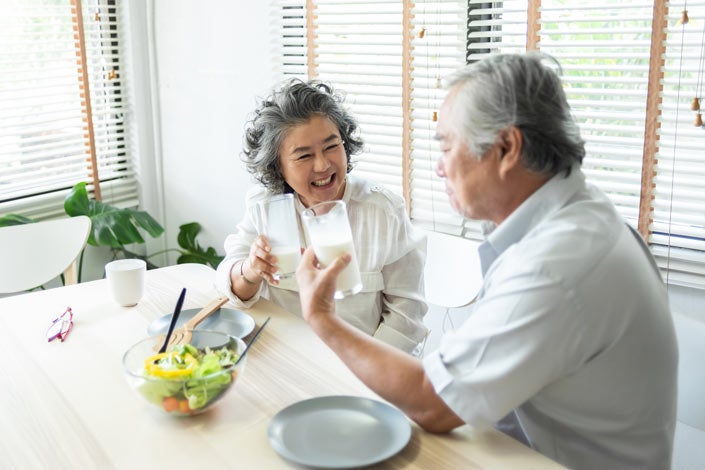
Your body needs calcium to build and repair bones. But it can't make calcium on its own. That's why it's important to eat calcium-rich foods. Some foods are naturally rich in calcium. Others have calcium added (fortified). It's best to get calcium from the foods you eat. But if you can't get enough, you may want to take calcium supplements. To meet your daily calcium needs, try the foods listed below.
Note: Calcium levels may vary, depending on brand and size.
Dairy
|
Source |
Calcium (mg) per serving |
|---|---|
|
Low-fat yogurt, plain |
415 mg/8 oz. |
|
Nonfat milk |
299 mg/1 cup |
|
Low-fat milk (2%) |
293 mg/1 cup |
|
Swiss cheese |
272 mg/1 oz. |
|
Cheddar cheese |
307 mg/1.5 oz. |
|
Ice cream, vanilla |
84 mg/½ cup |
Fish and beans
|
Source |
Calcium (mg) per serving |
|---|---|
|
Sardines, Atlantic, canned in oil, with bones |
325 mg/3 oz. |
|
Salmon, pink, canned, with bones |
181 mg/3 oz. |
|
Soybeans, fresh, boiled |
131 mg/½ cup |
|
White beans, cooked |
81 mg/½ cup |
|
Navy beans, cooked |
79 mg/½ cup |
Other sources
|
Source |
Calcium (mg) per serving |
|---|---|
|
Oatmeal, instant, fortified |
215 mg/1 cup |
|
Tofu, firm, made with calcium sulfate |
253 mg/½ cup |
|
Collards |
179 mg/½ cup |
|
English muffin, whole wheat |
175 mg/1 muffin |
|
Kale, fresh, cooked |
94 mg/1 cup |
|
Orange juice, calcium fortified |
349 mg/1 cup |
Daily calcium needs
Here are the recommended amounts of calcium for adults. Your daily calcium needs may be different. Ask your healthcare provider how much calcium you need.
- Adults ages 19 to 50: 1,000 mg per day
- Women ages 50 to 70: 1,200 mg per day
- Men ages 50 to 70: 1,000 mg per day
- Adults ages 71 and older: 1,200 mg per day
Featured in
Orthopedics CTA
Find a DoctorRelated Articles
Hip Safety: Getting Into and Out of Bed
After hip replacement surgery, getting in and out of bed can be difficult. These instructions can help.
Relieving Tension in Your Back
Being relaxed helps keep your mind healthy and your back ready to move. Read on for some helpful tips.
Wearing a Rib Belt
A rib belt is an elastic strap that may help reduce pain from chest muscle strain or rib fracture.
A Rotation That Starts at the Waist
This back exercise improves strength and flexibility of your spine. Start by sitting in a sturdy chair, with your feet flat on the floor.