When the firm, smooth tissue that covers the ball and socket of the hip is damaged, it can cause painful catching in the joint. This tissue is called cartilage. Injury to cartilage is called chondral damage. Arthroscopy is a surgery method that uses only small incisions and small tools. It can be done to fix chondral damage.
In the operating room
Just before surgery, you may be asked several times which hip is to be treated. This is a standard safety measure in the operating room. You will likely receive medicine (anesthesia) to make you sleep.
During the procedure
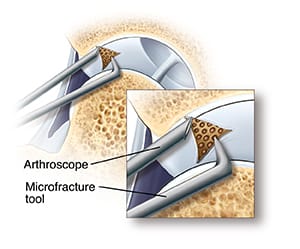
After you receive anesthesia, your leg is gently pulled to widen the hip joint. Next, the surgeon makes a few small incisions called portals. Through these portals, they insert surgical tools, including the arthroscope. The arthroscope sends images of the joint to a screen. These images allow the surgeon to look inside the joint. The joint is filled with sterile fluid to help the surgeon see more clearly.
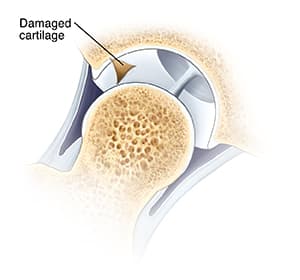
Repairing chondral damage
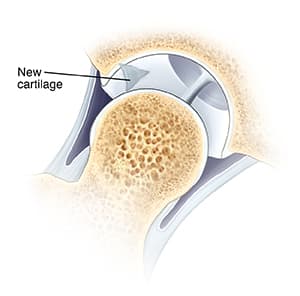
If the damaged cartilage is loose, it is removed. If the cartilage is missing, the exposed bone may be shaved to smooth it. Or small holes may be placed in the bone (microfracture). This allows new cartilage to form. Once the surgeon finishes, the portals are closed and bandaged. Then you are taken to the recovery room.
Online Medical Reviewer: L Renee Watson MSN RN
Online Medical Reviewer: Raymond Turley Jr PA-C
Online Medical Reviewer: Thomas N Joseph MD
Date Last Reviewed: 09/01/2025
© 2000-2026 The StayWell Company, LLC. All rights reserved. This information is not intended as a substitute for professional medical care. Always follow your healthcare professional's instructions.
Orthopedics CTA
Find a DoctorRelated Articles
Ankle Fracture Open Reduction and Internal Fixation (ORIF)
Open reduction and internal fixation (ORIF) is a type of surgery used to stabilize and heal a broken bone. You might need this procedure to treat your broken ankle. Read on to learn what to expect before, during, and after this surgery.
RICE
RICE stands for rest, ice, compression, and elevation. These actions may be recommended for fractures, sprains, strains, and bruises or bumps.
Treatment for Bone Bruise (Bone Contusion)
A bone bruise is an injury to a bone that is less severe than a bone fracture. Bone bruises are fairly common. They can happen to people of all ages.
Hip Arthroscopy: Before Surgery
Learn more about hip arthroscopy and what you can do before your surgery.