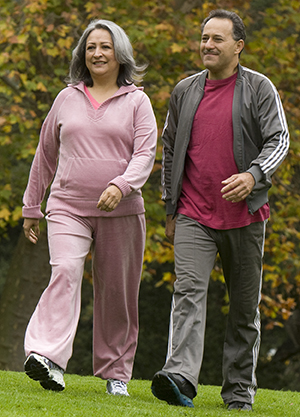
Walking has something for almost everyone, even people who are already fit. Walking is one of the safest ways to strengthen your heart and lungs. It can boost energy, help you lose weight, and reduce stress. Doing at least 150 minutes of moderate-intensity aerobic activity a week, such as brisk walking, can lower your risk of many chronic diseases. It may be helpful to use a fitness tracker, mobile app, or pedometer to help set and reach your personal walking goals.
Physical benefits
-
Brisk walking strengthens your heart, lungs, and bones, and tones your muscles.
-
When walking, your feet land with less impact than in other sports. This reduces chances of muscle, bone, and joint injury.
-
Regular walking improves your cholesterol levels and lowers your risk of heart disease. And it helps you control your blood sugar if you have diabetes.
-
Brisk walking is a weight-bearing activity, which helps keep your bones strong. This can help prevent brittle bones (osteoporosis).
Personal rewards
-
Taking walks can help you relax and manage stress. And fitness walking may make you feel better about yourself.
-
Walking can help you sleep better at night and make you less likely to be depressed.
-
Regular walking may help maintain your memory as you get older.
-
Walking is a great way to spend time with friends and family members. Be sure to invite your dog along!
Q & A about fitness walking
Q: Will walking keep me fit?
A: Yes. Regular walking at a brisk pace gives you all the benefits of other aerobic activities, such as jogging and swimming.
Q: Will walking help me lose weight and keep it off?
A: Yes. Per mile, walking can burn as many calories as jogging. Your doctor can help work walking into your weight-loss plan.
Q: Is walking safe for my health?
A: Almost always. Walking is safe if you have high blood pressure, diabetes, heart disease, or other conditions. Talk with your doctor before you start.
Online Medical Reviewer: Melinda Murray Ratini DO
Online Medical Reviewer: Stacey Wojcik MBA BSN RN
Online Medical Reviewer: Thomas N Joseph MD
Date Last Reviewed: 06/01/2025
© 2000-2026 The StayWell Company, LLC. All rights reserved. This information is not intended as a substitute for professional medical care. Always follow your healthcare professional's instructions.