Accidents involving slips, trips, or falls happen every day. They can cause injuries, pain, and days away from work. But many accidents can be prevented. Knowing the factors involved in slips, trips, and falls can help prevent them.
Understanding forces involved in slips, trips, and falls
-
Friction (traction) is the resistance between things. There's friction between your shoes and the ground. Without enough friction, you can slip and fall. With enough friction, you can move safely and stay balanced.
-
Momentum is a combination of weight, mass, and speed. The more momentum you have (the more mass and speed), the more serious an injury could be if you trip and fall. The less momentum you have, the less likely you'll hurt yourself if you fall.
-
Gravity is a pulling force. When you fall, or when something falls on you, gravity is the force that pulls you down to the ground. Without gravity, objects would float instead of fall.
Balance and gravity
Your body has three systems for keeping its balance:
-
Your eyes (visual system) keep track of visual clues.
-
Your inner ear (vestibular system) notices changes in your position.
-
Your nerves (proprioceptive system) sense where your body is and how it's moving.
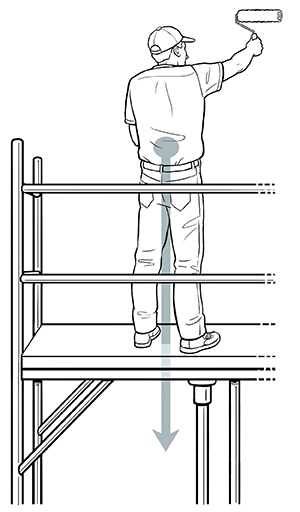
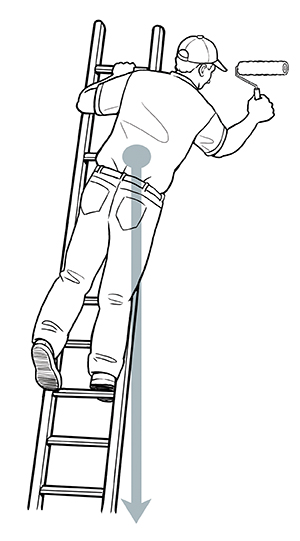
Keeping your balance often involves supporting your center of gravity. Imagine there's a string in the middle of your body. At the bottom of the string is a weight. The top of the string is your center of gravity. The weight is the direction your center of gravity is being pulled. To stay balanced, you need to keep your center of gravity supported.
Online Medical Reviewer: Chris Southard RN
Online Medical Reviewer: Marianne Fraser MSN RN
Online Medical Reviewer: Vinita Wadhawan Researcher
Date Last Reviewed: 10/01/2024
© 2000-2026 The StayWell Company, LLC. All rights reserved. This information is not intended as a substitute for professional medical care. Always follow your healthcare professional's instructions.